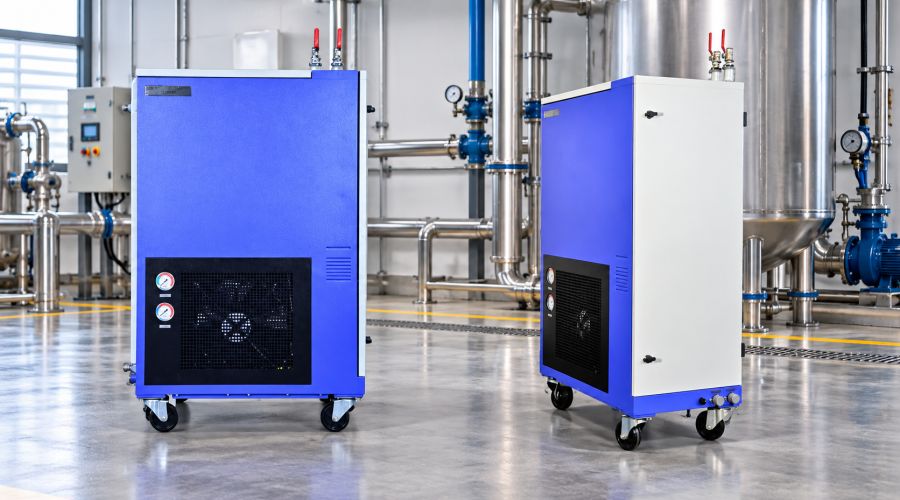
Fuel Conditioning System
The Fuel Conditioning System is designed to maintain the temperature, flow rate, and pressure of fuel supplied to the engine at constant, predefined set values. The system ensures stable and controlled fuel conditions for reliable engine testing and evaluation.
How It Works
The system controls the temperature of the fuel supplied to the engine through either indirect cooling or heating. Fuel coming from the main supply line is combined with the fuel returning from the engine and then passed through a high-efficiency heat exchanger.
A process controller continuously maintains the desired fuel temperature and pressure, thereby controlling the fuel flow. Once the fuel reaches the required set conditions, it is supplied to the engine feed pump.
The fuel supplied to the engine feed pump is always maintained in excess. The excess fuel is therefore bypassed and directed to the air separator, where it combines with the return-line fuel coming from the engine. This arrangement provides continuous fuel circulation while maintaining the required fuel conditions at the engine inlet.
- ✓ Precise fuel temperature control
- ✓ Controlled fuel pressure and flow rate
- ✓ Indirect fuel cooling or heating
- ✓ Continuous fuel circulation and bypass arrangement
Controlled Fuel Supply for Engine Testing
By maintaining fuel temperature, pressure, and flow at predefined set values, the Fuel Conditioning System provides consistent and controlled fuel conditions at the engine feed pump, supporting dependable and repeatable engine testing.
Combining controlled heating and cooling, process control, heat exchange, and continuous fuel circulation, the system delivers a stable and reliable fuel supply to the engine throughout the testing process.


